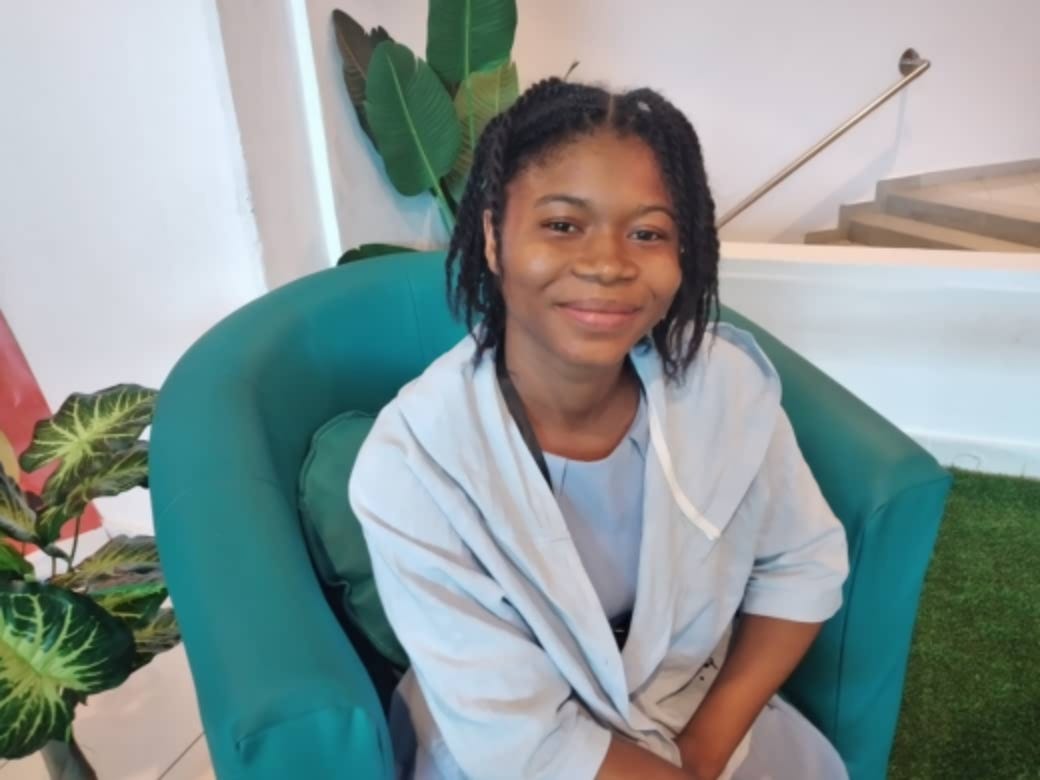
Adama
"Women are the strong ones"

“I grew up fighting men.”
Adama told me once as we chatted by the corridor outside the workshop.
She was leaning on the railing, her eyes fixated into the distance, where the blurred outline of the cobalt seas met a hazy horizon. It was an especially hot day, though the locals had long been immune to the temperature, chuckling as they told me that this was only the beginning. Wait until dry season comes, they would say, referring to the months from December until April when there were no longer daily downpours to wash away the heat. I did not want to find out.
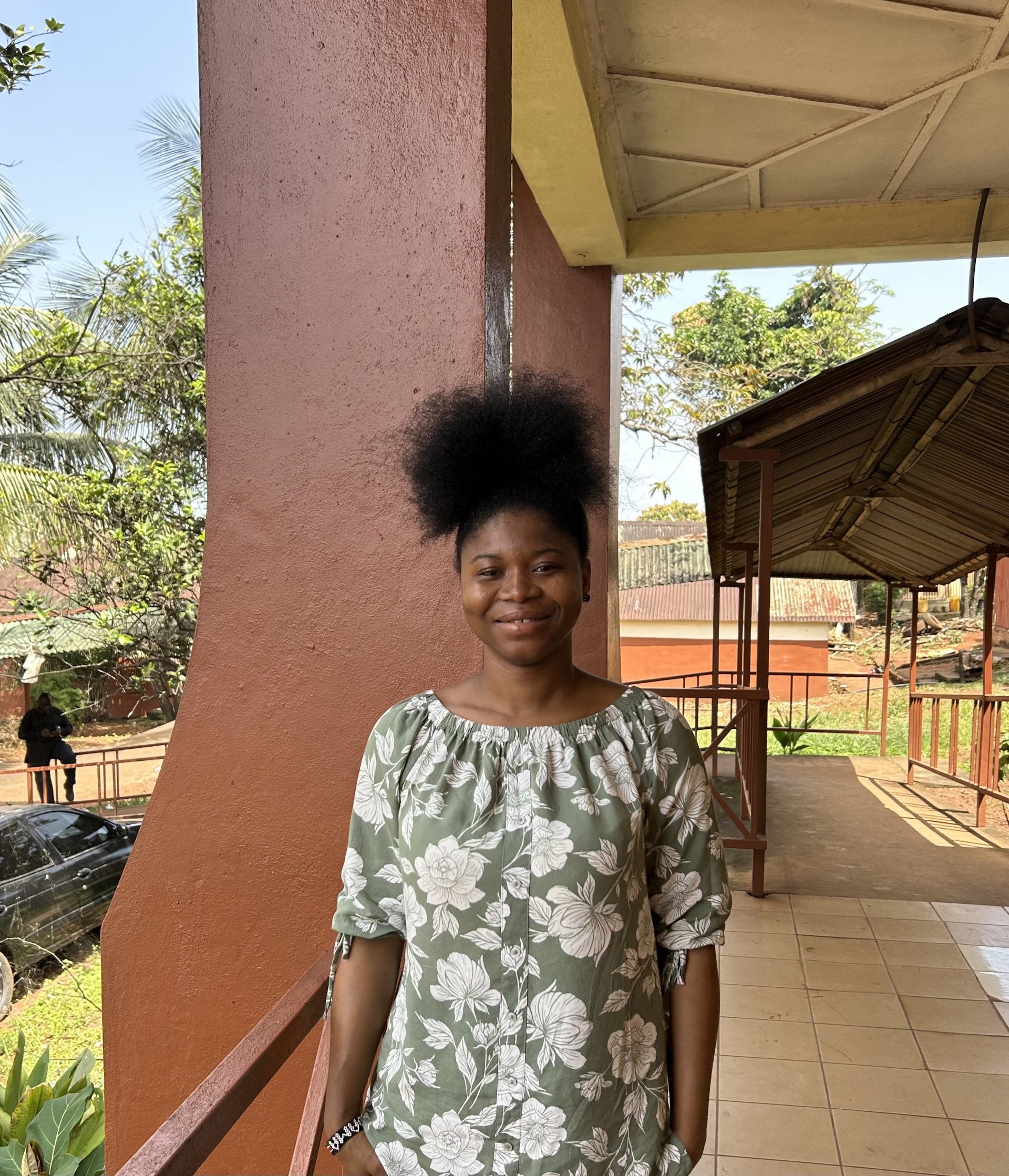
Adama Christina Conteh (doesn’t her name have a nice ring to it?) is another student at the clinic, where she’s worked for the past five years as a physiotherapy assistant. I often see her laughing and joking around with her classmates, having a quick wit and a jovial sense of humor. Like Isata, she was keen on trying out new tools whenever she got the chance. In fact, she told me she was motivated to apply for the program because she had been frustrated that there were no women working in the workshop.
Adama grew up witnessing the pronounced gender inequalities that existed all around her – and learning to defend herself against them. Initially raised by a single mother in a village outside Freetown, she described how, in her family, “women were the strong ones.”
“We had to fight for ourselves because we knew we couldn’t depend on men.”
She often got into physical fights with boys in her village, which continued when she was adopted by her aunt and moved to Freetown. She told me she wanted to be like a man, because, where she came from, “they value men more than women.”
Her aunt worked as a trader in the neighborhood of Dwazark, a hilly area on the outskirts of Freetown that she described to me as being known for witchcraft. Having had no formal education, the woman was determined not to repeat the same mistake with her niece. But Adama was stubborn. She refused to go to school, believing they would just send kids out to do farmwork like they did in the village. Luckily, a teacher took a liking to her, offering to help with uniform and registration costs. In the end, she reluctantly gave it a try.
She soon learned that, thankfully, school in Freetown did not entail farmwork, and that she was also quite good at it. She made it all the way to the senior secondary level, becoming a commerce student while helping her aunt out with various side jobs.
It was through a cleaning job that she met her second adoptive parent, a friend of her aunt by the name of Lorna French. She was seventeen at this point, and her aunt was struggling financially, so she moved in with Lorna. The new environment proved to be good for her. “I stopped being violent,” she told me, getting into fewer physical altercations with men who gave her trouble. She began to gain more confidence, learning to manage stress and believe in her own capabilities.
“Life got better, but when she got sick, things changed.”
When her adoptive mother fell ill, the family accused her of being a witch, responsible for the woman’s sickness. Things got difficult again. It was at this time that Adama began taking an online physiotherapy course. She had been taking care of Lorna — giving her massages and performing other physical therapy exercises. The latter encouraged her to open a massage parlor. Those plans never worked out, but thanks to skills from the course, she was able to find a job at the physiotherapy department of the National Rehabilitation Center.
She described how the experience was another positive influence in her life, particularly on her mental health. Interacting with patients has taught her how to better communicate with others. Indeed, seeing how well she got along with everyone around her, it’s hard to believe that she was the angry and rebellious child described in her story, but she tells me that she still struggles with the stresses of her upbringing.
“Whenever good things come my way, I feel as if I don’t deserve it.”
In fact, when the MIT team came to start the prosthetics education program, despite being frustrated that there were no women in the workshop, she felt that she was unqualified to apply. It was her boss who eventually convinced her.
“My boss said ‘No, you’re smart, you’re intelligent, you’re hardworking. You need to apply for this.’”
Now, she is one of four women in a cohort of ten students, spending her afternoons shadowing technicians as they work with bandsaws, drill presses, and milling machines. The male students treated them as equals. She no longer needed to fight to have a place at the table.
But Adama is still very much a fighter — the women in her life have taught her what is needed to survive and necessary to thrive. As I watch her spring between the classroom, workshop, and patient room, with a bag of water in her hand and a smile on her face, I can only hope that she continues to use that fighting spirit to challenge the status quo and pursue her full potential.