
Isata
"I want to be somebody"

Isata Lamin stands amidst a checkerboard of worktables, surrounded by the clamor of machinery and veil of sawdust that perpetually clung to the air of the National Rehabilitation Center workshop. It was a busy afternoon, but, like always, she was there to observe, minding neither the sparks that occasionally flew in her direction nor the pieces of wood and hardened plaster that sprayed from the decades-old socket router. She watches her classmate Momoh disassemble a knee joint in the corner, adjusting its alignment with an Allen key. She was not yet a technician herself, but she hangs around the workshop every day after class, shadowing the seniors in the cohort, never missing an opportunity to try out a new tool.
It's hard to believe that just a few months ago, the 25-year-old was spending her days scrubbing the floors of a hospital in the provinces, struggling to support a five-year-old son and aging mother.
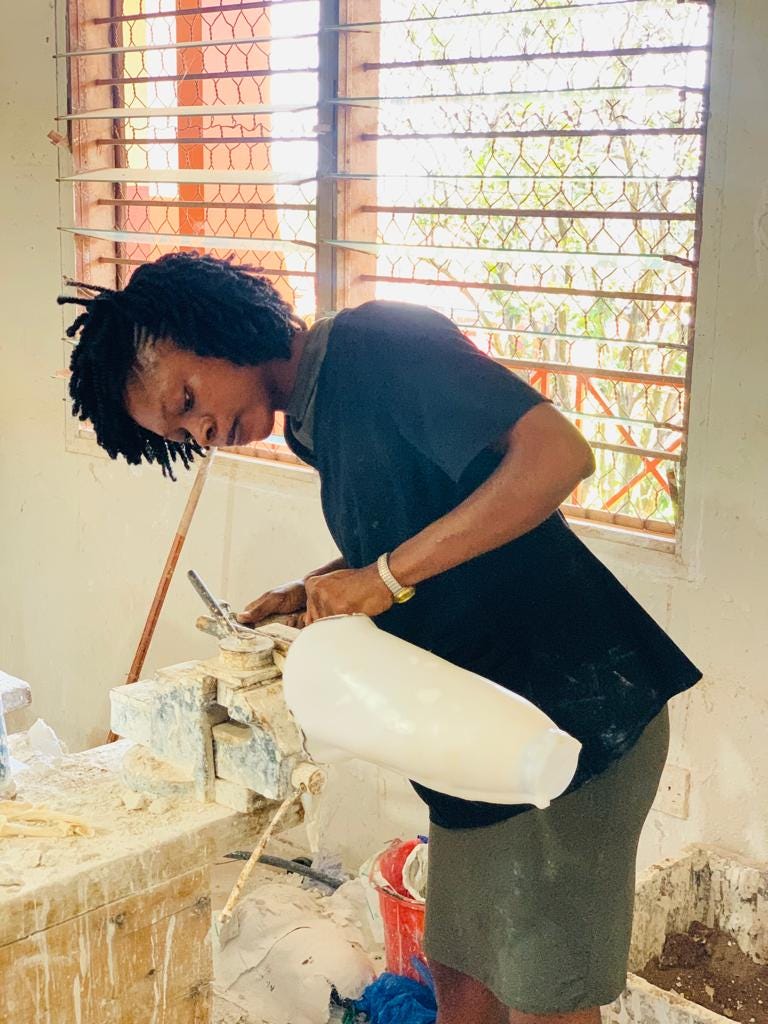
Isata grew up in a village near Koidu Town, the capital city of the Kono Province. She had gone to secondary school with plans of becoming a banker, but the sudden passing of her father left her family with little financial support. She eventually got a job as a cleaner at the Koidu Government Hospital, home to one of the few prosthetics and orthotics (P&O) clinics in the eastern part of the country. It was there that she found herself drawn to the hands-on and patient-centered work of the P&O practitioners.
“The first time I was working there, I saw the way they worked and talked to the patients, and I just thought, ‘I want to be like that.’”
So, when an MIT team came for a site visit, seeking students for a P&O training program, she was immediately interested. She had never worked directly in the medical field before, but three years of cleaning up after clinicians had given her ample time to observe. Before the team left, she asked if she could join the program.
They had already accepted three candidates, but one dropped out, and she was given an interview. Her determination moved the interviewers so much that they decided to award her with a scholarship, covering her studies in Freetown as part of the initial cohort of associate P&O students.
“I was just excited. At that time [when I heard the news] I was cooking, and I was not the one who finished cooking.” She laughs, recalling the fateful phone call earlier this year. “I just lied down in my bed and asked someone if I was dreaming or not and they said, ‘No, you are not dreaming.’”
Freetown was a five-hour drive away, and quite a lot more expensive. She managed to scrape together enough money to travel to the city, leaving her son under the care of her mother in Kono.
“I told them I will come. At that time, I didn’t have a single 1000 Leone1 with me so I went to somebody and I said: ‘Please, I want to go to Freetown to attend the program.’”
She’s been in Freetown for six months now, where she’s been quick to befriend her classmates and catch up on the basics of English and IT – the first part of the curriculum. Like many others in the program, she had never touched a computer before, so learning how to even type and save a document was a milestone.
“The first day I use a computer, I think the world is coming to an end. But now, thank God.” She laughs in relief. Anatomy was the most challenging subject now, but she’s excited to soon apply what she’s learned to working with actual patients.
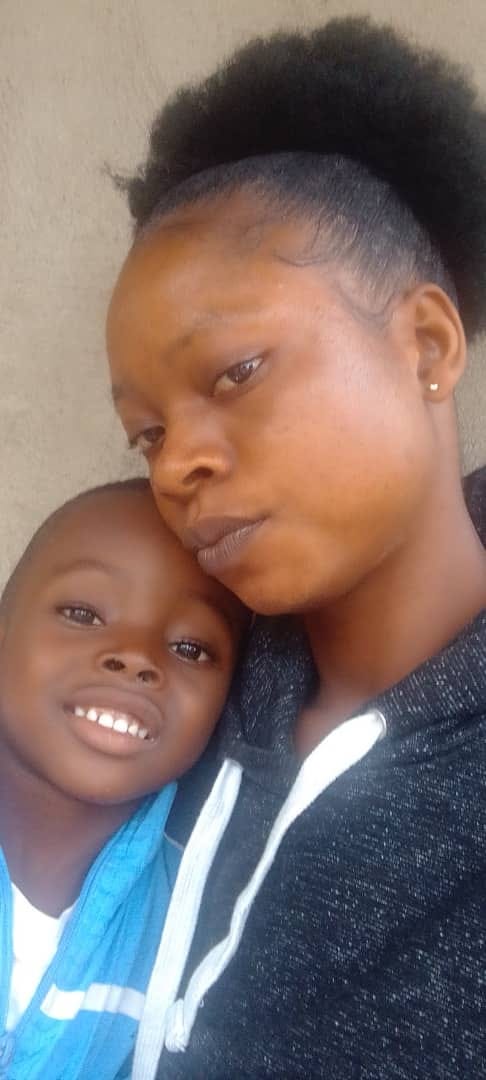
Living far from her family has been tough. In the beginning, she would try to visit Kono on the weekends, but rising fuel prices soon made the commute unsustainable. She hopes to finally see her son in December when there’s a break from classes.
“Every minute when I call, he asks, ‘Mom, when are you coming back?’ He thinks that when I say ‘December’ it’s tomorrow so he asks again the next day and I tell him, ‘December is not yet. You have to wait.’”
It must be hard, I say, recalling my own mother’s journey to the U.S. for graduate school when I was only two months old. Our circumstances could not be more different, of course, but being the child on the other side of the phone is never easy.
She nods.
“But I have to manage, because I want to be somebody.”
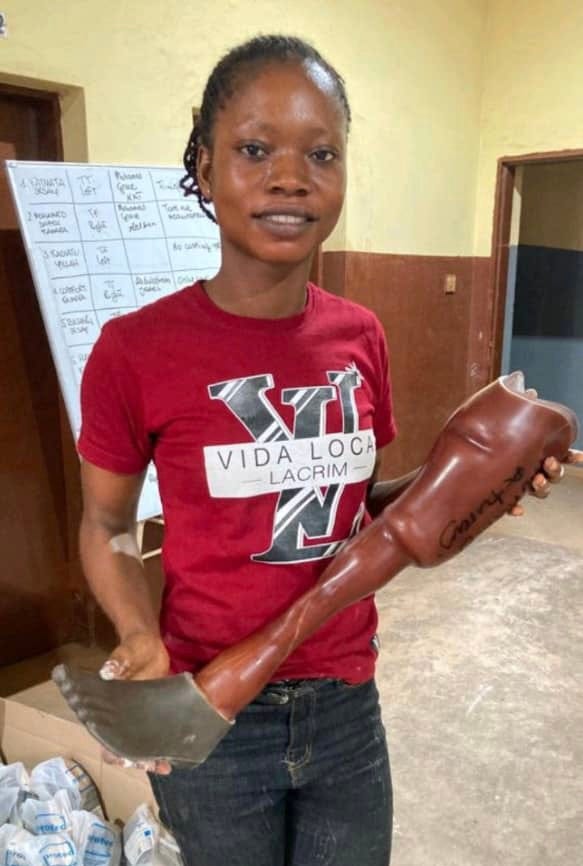
Ambitious. Driven. Resilient. I could use many words to describe Isata, but the first that comes to mind is always curious. Her inquisitive nature was evident from my very first week at the clinic, when she would follow me around workshop inspections simply to observe. She was quiet, but had a knack for noticing and learning from her surroundings. It was the skill that got her into the program, and one that would no doubt come in handy as she prepares for her career as one of Sierra Leone’s next generation of P&O practitioners.
“That’s the best thing… I’m continuing my education. I’m the only one in my family who is focused on my education… And I’m so glad, after everything that’s happened to me.”
roughtly $50 USD